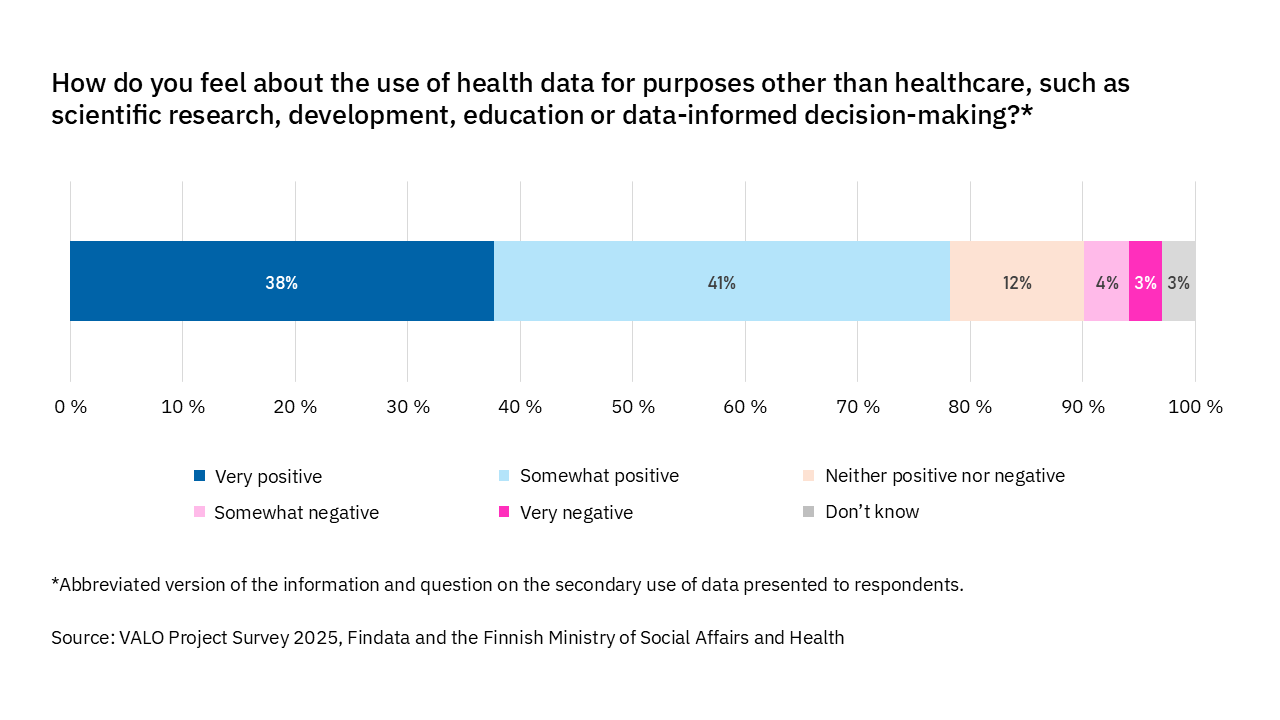
Most Finns have a positive attitude towards using health data in research and in developing health care and new treatments. At the same time, nearly nine out of ten believe that people should have the right to decide for themselves how their own health data is used.
This is shown by a survey commissioned by the Finnish Social and Health Data Permit Authority Findata and the Ministry of Social Affairs and Health.
The results are timely, as Finland is preparing the national implementation of the EU Regulation on the European Health Data Space (EHDS). A government proposal is expected to be submitted to Parliament in early October.
From 2029 onwards, the Regulation will affect, among other things, how health data can be used in research and how citizens can influence the use of their own data.
“It is important to discuss citizens’ views now, while the national solutions for the EU Regulation are being prepared. The survey shows that Finns recognise the benefits of using health data, but they also consider it important to be able to influence how their own data is used,” says Mervi Siltanen, Acting Director of Findata.
How the survey was conducted
- Aula Research conducted the citizen survey on behalf of Findata and the Ministry of Social Affairs and Health. The survey partly repeated one carried out in 2021.
- The survey was part of VALO, a joint Nordic project funded by the Nordic Council of Ministers. Its aim was to map people’s attitudes towards the use of their own health, biobank and genomic data.
- The survey was answered by 2,014 people living in Finland. The sample is weighted by gender and age to represent the population, with quotas by region.
- The margin of error is approximately 2.5%. The responses were collected in November 2025.
Finns have a positive view of research use
Around 80% of Finns have a positive attitude towards the secondary use of health data and towards the use of biobanks and genomic data.
Secondary use means using data for a purpose other than the one for which it was originally collected. For example, data generated during a patient’s care can later be used in research.
“In Finland, the secondary use of social and health data is strictly regulated. Using the data requires a permit, and the data can only be analysed in secure processing environments approved by the authorities,” Siltanen says.
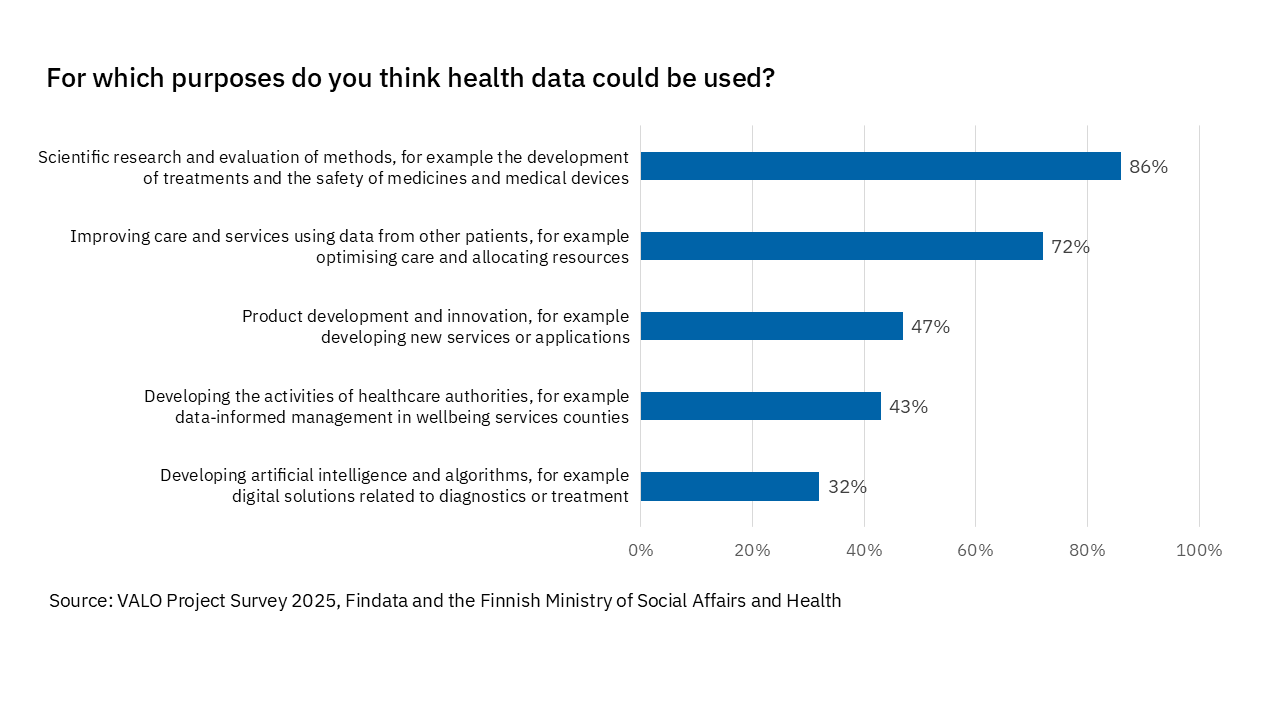
Scientific research is clearly the most widely accepted purpose for using health data: 86% of respondents support the use of health data in research. Developing social and health services and care also receives broad support (72%).
People with a higher education and those over 50 have the most positive attitudes towards the use of health data. Research carried out by the public sector is viewed more favourably than research by the private sector.
People do not want to give up control over their own data
Although the use of health data for research purposes receives broad support, Finns want to keep the right to decide on their own data.
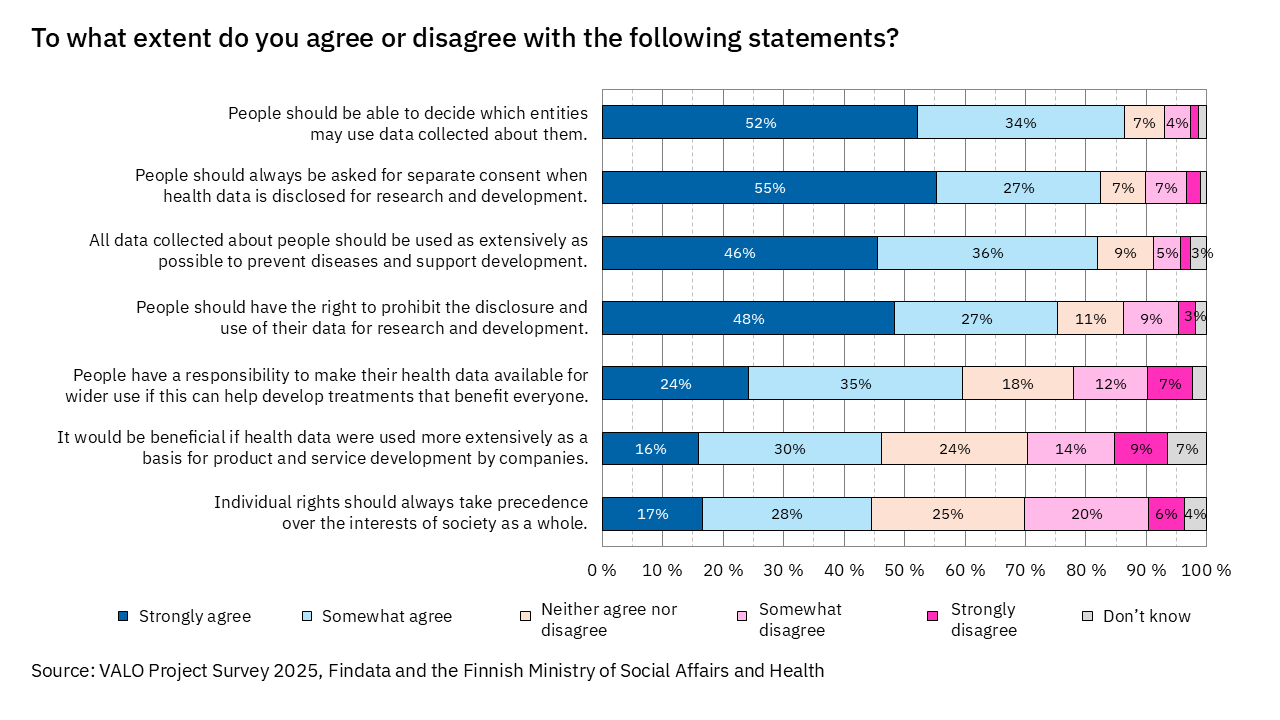
86% of respondents believe that people should have the right to decide for themselves who may use their health data.
At the same time, respondents also recognise the societal value of health data. As many as 82% think that all data collected about people should be used as much as possible for disease prevention, research and development.
“Citizens want health data to be used for research and for developing health care. At the same time, they want to know what the data is used for and what opportunities they themselves have to influence this,” Siltanen says.
At present, citizens can influence the use of their data through their rights under the General Data Protection Regulation (GDPR). The EHDS will add a new right to opt out, which will allow people to prohibit the use of their health data for secondary purposes if they wish.
Few people know about the EU Regulation that affects the use of their data
The EU Regulation on the European Health Data Space entered into force in early 2025. According to the survey, only 15% of Finns have heard of the EHDS.
The Regulation strengthens citizens’ ability to control their own health data, makes it easier to use the data safely for different purposes, and improves the interoperability of information systems across Europe.
For ordinary citizens, the most visible change is that in the future, health data will follow them from one EU country to another for primary use, much as it does in Finland today through the Kanta Services. For example, diagnoses, patient summaries and electronic prescriptions will also be available in other Member States.
Citizens will also receive better information than before about the purposes for which health data is used and who uses it.
“Trust in the use of health data is built on openness. It is important that people understand how their data is used and how the system will change in the future,” Siltanen says.
The EU provisions on the secondary use of health data will start to apply in 2029. Finland has had an act on the secondary use of health data in force since 2019, and it has been drawn on in preparing the EHDS rules.
Fact box
- The secondary use of social and health data is governed by a separate act, known as the Secondary Use Act: the Act on the Secondary Use of Health and Social Data (552/2019).
- Secondary use means that client and register data from social and health care are used for a purpose other than the primary purpose for which they were originally recorded. Examples of primary use are treating a patient or processing benefits.
- Under the GDPR, everyone has the right to object to the use of their data for secondary purposes, such as research.
- Finland currently has no centralised system for objecting to secondary use. Requests under the GDPR must be made to the controllers of the data. For example, wellbeing services counties hold data on the care provided, and Kela holds data on prescriptions.
- From March 2029, the use of health data will be governed by the EU Regulation on the European Health Data Space (EHDS).
Contact





Co-funded by the European Union. Views and opinions expressed are however those of the author(s) only and do not necessarily reflect those of the European Union or European Health and Digital Executive Agency. Neither the European Union nor the granting authority can be held responsible for them.